Russia is the largest country in the world, stretching all the way across Eastern Europe and Northern Asia. It is so big that it covers eleven different time zones and shares land borders with fourteen other countries. Most of the country’s population lives in its European part, where its capital and largest city, Moscow, is located. Russia is famous for its cold winters, deep forests like the Siberian Taiga, and beautiful historic buildings with colorful, onion-shaped domes.
On the global stage, Russia is a highly powerful and influential nation. It is known as an energy superpower because its land holds massive amounts of natural gas and oil, which it sells to other nations. The country is run by a centralized government led by President Vladimir Putin. In recent years, Russia has been at the center of global news due to its ongoing war with Ukraine, which has resulted in strict economic sanctions from many Western countries and changed how it trades with the rest of the world.
Whether Russia is safe to travel depends heavily on your nationality and the specific areas you visit. Major cities like Moscow and St. Petersburg generally maintain low rates of violent crime, and daily tourist life there feels peaceful and orderly.
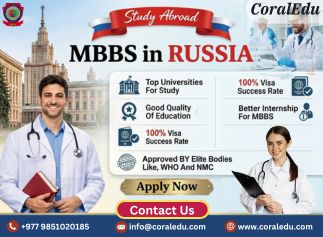
Studying MBBS in Russia is a highly popular and practical choice for international students, but it comes with specific trade-offs. On the positive side, Russia offers affordable, high-quality medical education with a total 6-year cost ranging from ₹15 lakh to ₹40 lakh ($25,000 to $40,000), which is a fraction of the cost of private medical colleges in countries like India. Admission is straightforward—requiring no tough entrance exams or donation fees—and many top government universities offer courses in English medium with degrees recognized globally by the World Health Organization (WHO) and India’s National Medical Commission (NMC).
1. Official Name: Russian Federation
2. Capital City: Moscow
3. Area: 17,098,246 square kilometers (the world’s largest country by landmass)
4. Population: Approximately 142 to 146 million
5. Currency: Russian Ruble (RUB)
6. Languages: Russian is the sole official language, with over 35 other recognized regional and ethnic languages spoken throughout the federal subjects
7. Economy: A major global economic power, Russia possesses one of the world’s largest GDPs (ranked 4th globally by PPP and 9th by nominal value). Its economy heavily relies on vast reserves of natural gas, petroleum, and minerals, making it a primary energy exporter.
1. Unbeatable Affordability: Tuition fees are heavily subsidized by the government. Degrees often cost just $2,500 to $6,000 annually, alongside a low cost of living, which significantly eases the financial burden on students.
2. Globally Recognized Degrees: Russian universities boast prestigious histories and are officially recognized by major global organizations like the WHO, UNESCO, and the NMC.
3. World-Class STEM and Medical Programs: Russia has a long-standing legacy of excellence in natural sciences, physics, and mathematics. It is highly regarded globally for its top-tier, English-medium MBBS (Medical) programs.
4. English-Taught Options: Many leading universities offer full-degree programs taught entirely in English, making the transition seamless for international students who do not know Russian.
5. Generous Scholarship Opportunities: The Russian Government offers thousands of state-funded scholarships (quotas) each year, which cover tuition for the entirety of the program.
6. Master a Strategic Language: For those interested, learning Russian—one of the six official UN languages—opens up lucrative career paths in diplomacy, international business, and translation.
7. Research and Innovation: Universities in major hubs like Moscow and St. Petersburg are equipped with state-of-the-art laboratories and offer hands-on experience in cutting-edge industries.
8. Excellent Student Infrastructure: Campuses typically feature comprehensive sports facilities, libraries, and affordable student housing, ensuring a comfortable quality of life.
9. Rich Cultural Heritage: Students get to immerse themselves in a world-renowned arts, literature, and architectural scene. The country is home to over 20 UNESCO World Heritage sites.
10. Multicultural Environment: Home to over 400,000 international students from more than 200 Countries, Russian campuses provide a vibrant, culturally diverse, and inclusive environment.
Total Duration | 6 years, including 1 year of mandatory internship. |
Curriculum | The MBBS program in Russia covers both theoretical and practical aspects of medicine, with a focus on hands-on training in hospitals. |
Medium of Instruction | Many universities offer MBBS programs in English, making it accessible for international students. |
Tuition Fees | MBBS programs in Russia are generally more affordable than in many other countries, including India and some Western nations. |
Cost of Living | The cost of living in Russia is also relatively low, making it an attractive option for students on a budget. |
Average Annual Fee | The average annual fee for MBBS in Russia ranges from INR 2.4 to 5.1 lakhs. |
Direct Admission | Students can apply for MBBS admission in Russia online, typically requiring scans of required documents. |
Eligibility | A minimum of 50% aggregate marks in PCB subjects in Class 12th and a NEET passing score are generally required. |
No Entrance Exam | Indian students generally do not need to take any entrance exams for MBBS admission in Russia. |
|
|
| 1. | Academic Qualifications: You must have passed your 10+2 (or equivalent) exams with Physics, Chemistry, Biology, and English as core subjects. |
2. | Minimum Marks: General Category: At least 50% marks in Physics, Chemistry, and Biology (PCB) combined, Reserved Categories (SC/ST/OBC): At least 40% to 45% marks in PCB, depending on university rules. |
3. | NEET Qualification: You must have a valid NEET scorecard with passing marks, which is mandatory to practice in your home country after graduation. |
| 4. | English Proficiency: Most Russian medical universities do not require IELTS or TOEFL for English-medium programs, but you should have a good understanding of the language. |
5. | University Entrance Exams: Some universities may conduct their own basic entrance tests or interviews in subjects like Biology and Chemistry. |
6. | Age Limit: You must be at least 17 years old by December 31 of the year you are applying. The general maximum age limit is 25 years. |
Step-by-Step Admission Process
1. Step 1: University Selection: Choose a medical university recognized by the National Medical Commission (NMC) and the World Directory of Medical Schools (WDOMS).
2. Step 2: Online Application: Fill out the admission form on the university portal and upload scanned copies of your academic transcripts.
3. Step 3: Verification & Offer Letter: The University reviews your documents and issues an Official Admission/Offer Letter within 3 to 10 working days.
4. Step 4: Visa Invitation Letter: The University requests an official Visa Invitation Letter from the Ministry of Foreign Affairs of the Russian Federation (takes 3 to 4 weeks).
5. Step 5: Visa Processing: Apply for a Russian Student Visa at the Russian Embassy or Consulate using your invitation letter.
6. Step 6: Travel & Enrollment: Book your flights to arrive by late August or early September, pay your first-year tuition fees upon arrival, and start classes.
So.No. | Initial Application & Admission |
|
|
|
|
2. | University Invitation & Legalization |
| Once accepted, you will receive an official Invitation Letter from the Russian university. At this stage, you must prepare the following for legalization and translation
|
3. | Student Visa Processing |
| To secure your Russian student visa, submit the following to the Russian Embassy or local visa center
|
|
|
|
|
|
|
Document | Purpose |
Bank Statements | Required for securing seats. |
MBBS Fees Receipt | Proof of fee payment. |
Invitation Letter | From Medical Universities in Russia. |
Ministry of External Affairs Approved Documents | Required for verification. |
Legal Papers from Russian Embassy | Required for documentation. |
Health Insurance Certificate | Required for studying in Russia. |
Travel Insurance Certificate | Mandatory for travel. |
So.No. | University | |
1 | I.M. Sechenov First Moscow State Medical University (Moscow) | |
2 | Kazan State Medical University (Kazan) | |
3 | Pirogov Russian National Research Medical University (RNRMU) (Moscow) | |
4 | Pavlov First State Medical University of St. Petersburg (Saint Petersburg) | |
5 | RUDN University (Peoples’ Friendship University of Russia) (Moscow) | |
6 | Novosibirsk National Research State University (Novosibirsk) | |
7 | Kazan Federal University (Kazan) | |
8 | Bashkir State Medical University (Ufa) | |
9 | Orenburg State Medical University (Orenburg) | |
10 | Kursk State Medical University (Kursk) | |
11 | Siberian State Medical University (Tomsk) | |
12 | North-Western State Medical University named after I.I. Mechnikov (Saint Petersburg) | |
13 | Volgograd State Medical University (Volgograd) | |
14 | Saratov State Medical University (Saratov) | |
15 | Crimea Federal University named after V.I. Vernadsky | |
16 | Saint Petersburg State Pediatric Medical University (Saint Petersburg) | |
17 | Altai State Medical University (Barnaul) | |
18 | Voronezh State Medical University named after N.N. Burdenko (Voronezh) | |
19
20. | Rostov State Medical University (Rostov-on-Don) Far Eastern Federal University (Vladivostok) |
Year 1: Foundational Medical Sciences (Pre-Clinical) |
| Human Anatomy, Histology, Embryology, and Cytology, Medical Biology and Genetics, Physics and Chemistry, Latin and Medical Terminology, Russian Language, Physical Training |
Year 2: Understanding Disease Mechanisms (Pre-Clinical) |
| Human Anatomy, Normal Physiology, Biochemistry, Microbiology, Virology, and Immunology, Pathological Anatomy and Pathological Physiology, General Economics, Philosophy, and Sociology |
Year 3: Introduction to Clinical Science (Para-Clinical) |
| Pharmacology and Clinical Pharmacology, Pathological Anatomy and Physiology, Internal Diseases, General Surgery, General Hygiene |
Year 4: The Clinical Phase Begins |
| Internal Medicine, Surgery, Obstetrics and Gynecology. Pediatrics, Neurology, Neurosurgery, and Medical Genetics, Ophthalmology, Otorhinolaryngology, Dermatology and Venereology, Radiodiagnostics and Radiotherapy |
Year 5: Specialized Clinical Training |
| Infectious Diseases, Oncology, Traumatology and Orthopedics, Psychiatry, Medical Psychology, and Narcology, Urology, Pediatric Surgery, Stomatology, Clinical Pathological Physiology |
Year 6: Advanced Clinical Practice & Internship |
| Internal Medicine, General Surgery and Emergency Medicine, Obstetrics and Gynecology , Forensic Medicine, Tropical Diseases and Epidemiology , Medical Law, Modern Instrumental Examination Methods |
|
|
|
1. General Practitioner (GP)
2. Hospital Consultant / Specialist
3. Private Clinic Owner
4. Emergency Medicine Doctor
5. Defense Services Medical Officer
6. Public Health Administration Executive
7. Hospital Administrator / Healthcare Manager
8. Medical Superintendent
9. Government Medical Officer
10. Medical Professor / Lecturer
11. Clinical Research Scientist
12. Epidemiologist
13. Medical Consultant for Corporate Firms
14. Pharmaceutical Advisor / Drug Safety Associate
15. Medical Informatics Specialist
16. Health Insurance Medical Underwriter
17. Medical Legal Consultant / Expert
18. Medical Writer / Medical Journalist
19. International Health Agency Officer
20. NGO Health Director
Top Government and Global Scholarships
1. Government of Russian Federation Scholarships: A highly competitive state-level program covering free tuition, student dormitory accommodation, and a monthly maintenance allowance throughout the program.
2. Open Doors: Russian Scholarship Project: Organized by the Association of Global Universities, this international competition allows high-achieving students worldwide to study tuition-free at top Russian universities.
3. World Health Organization (WHO) Scholarships: Provides financial assistance for tuition and living expenses to medical students from developing countries who commit to returning to their home nation to practice.
University-Specific Merit Scholarships
1. People’s Friendship University (RUDN University), Moscow
2. First Moscow State Medical University (Sechenov University), Moscow
3. Kazan Federal University, Kazan
4. Kursk State Medical University, Kursk
If you choose to stay and work in Russia, you must pass the Russian medical licensure examination (GOZ) and master the Russian language.
1. Interns/Stipends: ₹20,000 to ₹40,000 per month
2. General Practitioner (GP): ₹45,000 to ₹70,000 per month (starting salary)
3. Experienced/Specialist Doctors: ₹1 Lakh to ₹2.5+ Lakhs per month, depending on location and private vs. public sector
Lifestyle in Russia is a unique blend of modern city living, strong family traditions, and adaptation to a cold climate. Most Russians live in multi-story urban apartments and rely heavily on well-developed public transportation, like buses and underground metro systems, to get to work or school. Daily routines often start early with traditional comfort foods like kasha (porridge), followed by home-cooked evening meals centered around hearty staples like borsch (beet soup) and hot tea. Because Russian culture places a high value on deep personal relationships, people regularly host warm, lively gatherings for friends and family rather than meeting out at expensive restaurants. To balance their busy city lives, many families spend weekends and holidays escaping to their dacha (a traditional country cottage), where they enjoy nature walks, gardening, foraging, or winter sports like skiing.
By providing comprehensive assistance, CoralEdu simplifies the process of studying MBBS in Russia for students, making it smoother and more manageable.
can help – fill in your details and we’ll call you back.