Romania is an independent nation situated at the crossroads of Central, Eastern, and Southeastern Europe, sharing borders with Ukraine, Moldova, Bulgaria, Serbia, and Hungary. Spanning 238,397 square kilometers, the country boasts diverse geography, ranging from the magnificent Carpathian Mountains to the Black Sea coastline. Its capital and primary economic hub is Bucharest, and the country has a population of approximately 19 million. As a member of both the European Union and NATO, Romania holds a unique position in the region due to its Latin heritage; its official language, Romanian, is the only Romance language spoken in Eastern Europe.
In terms of travel, Romania is an exceptionally safe country. Official travel advisories (such as those from the US State Department) classify Romania as ‘Level 1,’ the lowest-risk category. According to crime index data from Numbeo, rates of violent crime in the capital, Bucharest, and other major tourist cities are very low. Statistically, these cities are safer than major metropolises like London, Paris, or New York. There are no dangerous “no-go zones,” and tourists—including women traveling alone—can move about freely at night.
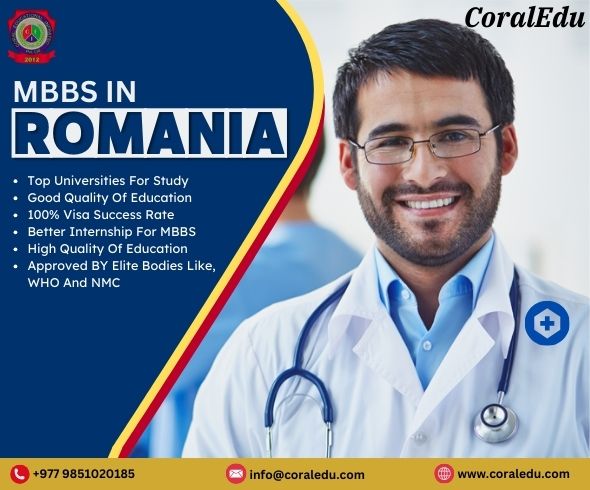
Romania is an excellent and highly recommended destination for pursuing an MBBS (Medicine) degree. Medical programs in Romania span six years, comprising five years of academic study and a one-year clinical internship. These programs are taught entirely in English, ensuring there are no language barriers for international students. The degrees hold global recognition from major medical bodies such as the World Health Organization (WHO) and the National Medical Commission (NMC). This means you may be eligible to take licensing exams to practice medicine anywhere in the world, including India, the USA, and the UK. Studying in Romania is significantly more affordable than attending private medical colleges in India or Western Europe; annual tuition fees range from €5,000 to €8,500, and monthly living expenses are also low. Admission is easy, as most public universities do not require an entrance exam.
1. Official Name: România
2. Capital City: Bucharest (București)
3. Area: 238,397 square kilometres.
4. Population: Approximately 18.8 to 19 million people
5. Currency: Romanian Leu (RON)
6. Languages: Romanian (Official language, a native Romance language); minority languages include Hungarian and Romani.
7. Economy: Romania ranks 38th globally in nominal GDP with an estimated economic output of approximately $480.8 billion. Romania is a high-income, fast-developing market economy driven heavily by services, manufacturing, and technology.
1. Latin Roots in a Slavic Sea: Romania is the only country in Central and Eastern Europe that retained its Latin heritage from the Roman Empire. The Romanian language is a Romance language, making it distinct from its Slavic and Germanic neighbors.
2. European Union & NATO Member: After shedding its communist past, Romania made significant steps toward Western integration. It joined NATO in 2004 and became a member of the European Union (EU) in 2007.
3. A Thriving Tech Hub: Often referred to as the “Silicon Valley of Eastern Europe,” Romania has a booming IT sector. It consistently ranks among the top countries globally for internet speed, highly skilled software engineers, and fiber-optic coverage.
4. The Capital: Bucharest: Known as the “Little Paris of the East,” Bucharest is the largest city in southeastern Europe. It contrasts wide, tree-lined boulevards and Belle Époque architecture with massive Soviet-era monuments like the Palace of the Parliament.
5. UNESCO World Heritage Sites: Romania is home to 11 UNESCO World Heritage Sites. These include the spectacular painted monasteries of Bucovina, the wooden churches of Maramureș, and the well-preserved Dacian Fortresses of the Orăștie Mountains.
6. Untouched European Wilderness: Romania contains the largest remaining areas of virgin, primeval forests in Europe. Because of this, it is home to the continent’s largest populations of brown bears, wolves, and lynx.
7. Dacian Origins: Before becoming a Roman province, the territory of modern Romania was known as Dacia. The Dacians were formidable warriors, and their legacy remains a major source of national pride.
8. Affordable Cost of Living: Romania remains one of the most budget-friendly destinations in the European Union. This makes it highly attractive to digital nomads, expats, and students looking for high-quality, inexpensive higher education.
9. Significant Agricultural Producer: Due to its fertile plains and varied microclimates, Romania has immense agricultural potential. It is historically one of Europe’s top producers and exporters of corn, wheat, and sunflower seeds.
10. A Welcoming, Latin Culture: Despite the turbulent history of empires coming and going (from the Ottomans to the Austro-Hungarians and Soviets), the Romanian people are known for their vibrant, warm, and highly hospitable culture, characterized by a lively artistic community.
Aspect | Details |
Intake | September |
Minimum Percentage | 50% in PCB |
NEET Requirement | Yes, with qualifying marks |
IELTS / TOEFL Requirement | Not required |
Processing Time | 90 days |
Fees per Year | 7000 Euros per year |
Living Cost in Romania | 250 Euros per month |
Duration | 5 years of classroom training + 1 year of internship |
Medium of Instruction | English |
Top MBBS Universities | All Government Universities |
Recognition | NMC and WHO approved |
Here is the name list of the leading 20 universities in Romania, based on overall national and international academic consensus:
1. Babeș-Bolyai University (Cluj-Napoca)
2. University of Bucharest (Bucharest)
3. Alexandru Ioan Cuza University (Iași)
4. Polytechnic University of Bucharest (Bucharest)
5. West University of Timișoara (Timișoara)
6. Politehnica University of Timișoara (Timișoara)
7. Technical University of Cluj-Napoca (Cluj-Napoca)
8. Transilvania University of Brașov (Brașov)
9. Gheorghe Asachi Technical University of Iași (Iași)
10. Bucharest University of Economic Studies (Bucharest)
11. Carol Davila University of Medicine and Pharmacy (Bucharest)
12. Iuliu Hațieganu University of Medicine and Pharmacy (Cluj-Napoca)
13. Grigore T. Popa University of Medicine and Pharmacy (Iași)
14. University of Craiova (Craiova)
15. Lucian Blaga University of Sibiu (Sibiu)
16. Dunărea de Jos University (Galați)
17. University of Oradea (Oradea)
18. University of Agricultural Sciences and Veterinary Medicine of Cluj-Napoca (Cluj-Napoca)
19. University of Agronomic Sciences and Veterinary Medicine of Bucharest (Bucharest)
20. 1 Decembrie 1918 University
1. | Age Limit: You must be at least 17 years old by December 31 of the admission year. While there was previously an upper age limit of 25, many Romanian universities have lifted or relaxed this. |
2. | Academic Qualifications: You must have completed 10+2 (or an equivalent high school diploma) in the Science stream. Core subjects must include Physics, Chemistry, and Biology. |
3. | Minimum Marks: You generally need an aggregate score of at least 50% in the PCB (Physics, Chemistry, Biology) group. |
| 4. | Entrance Exam: Many top-tier universities require you to clear a university-conducted entrance test (typically in Biology and Chemistry) or an interview. |
5. | English Proficiency: Since the medium of instruction is English, you may be required to prove English language proficiency by submitting scores like IELTS (usually 6.5 or above) or TOEFL. If applying for a program taught in Romanian, you will need to complete a preparatory foundation year for the language. |
| 6. | NEET (For Indian Students): If you are an Indian national, qualifying for the NEET exam is mandatory to be legally eligible to practice medicine in India after graduation. |
1 | Passports: A valid international passport (original and scanned copies of the front and back pages). |
2 | Academic Transcripts: 10th and 12th-grade mark sheets and passing certificates. |
3 | School Leaving/Transfer Certificate: Proof of completion from your last attended institution. |
4 | National ID: A government-issued ID, such as an Aadhaar card. |
5 | Medical Fitness Certificate: A physical fitness and general health certificate. |
6 | Infectious Disease Reports: Specific reports confirming you are free from HIV, Hepatitis B/C, and tuberculosis. |
7 | Vaccination Records: Proof of basic immunizations (some universities request this). |
1. Affordability:
Tuition fees in Romania are significantly lower compared to countries like the US, UK, or Australia, making it a financially viable option for international students.
2. High-Quality Education:
Romanian medical universities are known for their rigorous curriculum and comprehensive training, including both theoretical and practical learning.
3. Globally Recognized Degrees:
Romanian medical degrees are recognized by the WHO, NMC, and other international medical bodies, allowing graduates to practice globally after passing relevant licensing exams.
4. English-Medium Programs:
Many medical universities in Romania offer programs taught in English, easing the transition for international students.
5. Practical Exposure:
Students get hands-on experience through internships and clinical placements at well-equipped hospitals.
6. Schengen Country:
Romania’s membership in the Schengen area allows for easier travel and study opportunities within Europe.
7. Low Cost of Living:
The cost of living in Romania is relatively low compared to other European countries, making it easier for students to manage their finances.
8. No Entrance Exam:
Unlike India’s NEET, there is no entrance exam for MBBS admission in Romania.
9. Career Opportunities:
Graduates can pursue specialization, work in Europe, or return to their home countries.
10. Rich Culture and History:
Romania offers a unique cultural experience with its rich history and beautiful landscapes
Step-by-Step Admission Process
1. Submit University Application: Apply directly through the university’s online portal by uploading your legalized documents and paying the application fee.
2. Obtain the Acceptance Letter: The university will forward your application to the Romanian Ministry of Education. Once approved, you will receive an Acceptance Letter, which is mandatory for your visa.
3. Pay Tuition Fees: Upon receiving the acceptance letter, you must pay your first year’s tuition fee directly to the university’s bank account and obtain the receipt.
4. Apply for a Student Visa (Type D): Submit your visa application to the Romanian Embassy or Consulate in your home country. Processing takes roughly 30 to 45 days. Required visa documents include:
5. Travel and Register: Once you arrive in Romania, you must register with the local immigration office to receive your Temporary Residence Permit for the duration of your studies.
The 6-year program is broken down into foundational and clinical stages:
Phase 1: Foundational Sciences (Years 1 & 2) |
| |
Phase 2: Clinical Sciences (Years 3 & 4) |
| |
Phase 3: Specialization & Internship (Years 5 & 6) | The final phase focuses on specialized medicine, advanced clinical rotations, and hands-on patient care. | |
Year 5: | Pediatrics, Obstetrics & Gynecology, Neurology, Oncology, and Preventive Medicine. | |
Year 6: The mandatory rotating clinical internship | You will work directly under senior doctors in university teaching hospitals, ending with the State Board Examinations. | |
So.No. | 1. Tuition Fees | |||
| ||||
So.No. | 2. Living & Accommodation Costs | |||
| ||||
| So.No. | One-Time or Yearly Expenses (First Year Only) | |||
| ||||
| ||||
|
|
| ||
The top 15 career and job opportunities available after completing your MBBS in Romania include:
1. Medical Resident Doctor
2. General Practitioner (GP) / Junior Doctor
3. Clinical Researcher / Research Associate
4. Healthcare Administrator / Hospital Manager
5. Medical Writer / Medical Journalist
6. Pharmaceutical / Pharmacovigilance Specialist
7. Public Health Consultant
8. Sports Medicine Physician
9. Medico-Legal Advisor / Consultant
10. Occupational Health Physician
11. Health Informatics Specialist
12. Medical Educator / Clinical Tutor
13. Organ Transplant Coordinator
14. Telemedicine / Digital Health Consultant
15. Non-Governmental Organization (NGO) Health Coordinator
The top 5 scholarships for MBBS students in Romania are outlined below:
1. University Merit Scholarships (Excellence Grants)
Most leading medical universities in Romania—such as Carol Davila University of Medicine and Pharmacy (Bucharest) and Iuliu Hatieganu University of Medicine and Pharmacy (Cluj-Napoca)—offer excellence awards based on high academic standing.
2. Need-Based Assistance
Romanian universities often have welfare committees that provide financial support to students facing sudden economic hardship.
3. Erasmus+ Study Mobility Program
European Union-funded Erasmus+ grants are open to international students enrolled in Romanian universities.
4. Bilateral Agreements & Institutional Grants
Romania maintains cultural and educational cooperation agreements with various countries around the globe.
5. Institutional & Private Medical Endowments
Various specialized NGOs, international foundations, and the university itself provide private endowments. Programs like the Rotary Foundation Global Grants or specific corporate health scholarships are occasionally available.
Practicing in Romania
Life in Romania is very social, relaxed, and deeply connected to nature. People are famous for being warm, welcoming, and hosting large family gatherings with plenty of food. In modern cities, you will find trendy cafes, a fun nightlife, and some of the fastest internet in the world. In contrast, countryside villages offer a quiet pace where people still practice centuries-old farming and folk traditions. On weekends, locals love to travel to the beautiful Carpathian Mountains for hiking or relax on the sunny beaches of the Black Sea.
These services are designed to make the MBBS application process in Romania as smooth and efficient as possible, providing students with the resources and support they need to succeed.
can help – fill in your details and we’ll call you back.